The Art of Manufactured Reality: How Elite Players Weaponize Behavioral Economics to Win Without Superior Cards
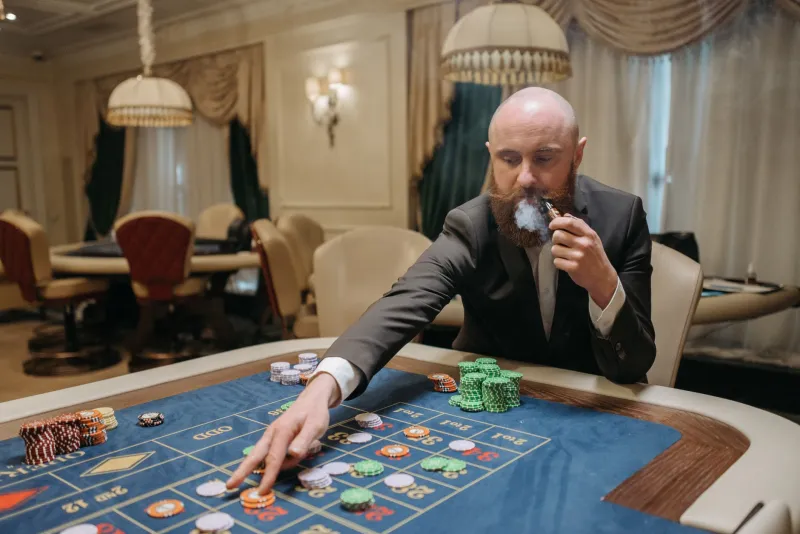
There is a persistent myth in competitive gaming circles that the player with the strongest hand ultimately prevails. The most sophisticated players know otherwise. At the highest levels of play—where six and seven-figure pots are contested with surgical precision—the cards themselves are almost secondary. What truly separates the elite from the merely talented is an intimate command of behavioral economics: the science of how human beings make irrational decisions under uncertainty, pressure, and incomplete information.
The world's most profitable high-stakes players do not simply bluff. They architect entire psychological environments designed to distort opponent perception, manipulate emotional responses, and exploit the cognitive shortcuts that every human brain relies upon. Understanding this discipline is not optional at the elite level. It is the curriculum.
Anchoring: Setting the Trap Before the Hand Is Played
Anchoring is among the most powerful and least appreciated tools in a sophisticated player's arsenal. In behavioral economics, anchoring refers to the human tendency to rely disproportionately on the first piece of information encountered when making subsequent decisions. Elite players exploit this phenomenon with remarkable consistency.
Consider the player who establishes an early pattern of conservative, methodical betting across the opening rounds of a session. Every action—the deliberate pause before calling, the modest sizing on strong hands, the visible discomfort when facing aggression—serves a singular purpose: anchoring the table's perception of that player as risk-averse and straightforward. When the moment arrives to execute a high-stakes bluff, that manufactured reputation functions as camouflage. Opponents process the aggressive bet through the lens of everything they believe they know, and the anchor distorts their judgment accordingly.
This is not accidental. The most disciplined players at premium platforms like Bone168 VIP treat their early-session behavior as an investment—a deliberate expenditure of time and chips designed to purchase credibility that will be redeemed at precisely the right moment.
Availability Bias and the Memory You Create for Your Opponent
Availability bias describes the cognitive tendency to assess the likelihood of an event based on how easily a relevant example comes to mind. Elite players understand that they are not merely playing cards—they are curating the mental library their opponents will consult when making critical decisions.
A well-timed showdown of a genuine premium hand, executed at a moment when it might otherwise be folded, plants a vivid memory in the opponent's mind. That image—the ace and king turned face-up, the quiet confidence of the reveal—becomes the dominant reference point. Hours later, when a sophisticated bluff is deployed with identical betting mechanics, the opponent's brain retrieves that memory and assigns it outsized probability. The bluff succeeds not because of the cards, but because of the story told three hands earlier.
Legendary high-stakes competitors have long understood this principle intuitively. The strategic slowplay of a monster hand is not merely about extracting maximum value in that moment. It is about manufacturing a psychological artifact—a vivid, available memory—that will pay dividends indefinitely.
Loss Aversion: Exploiting the Asymmetry of Pain
Perhaps no concept from behavioral economics is more directly applicable to elite gaming than loss aversion. Documented extensively by psychologists Daniel Kahneman and Amos Tversky, loss aversion describes the well-established reality that human beings experience the pain of a loss approximately twice as intensely as the pleasure of an equivalent gain. Elite players do not merely acknowledge this asymmetry—they weaponize it.
The mechanics are elegant. When a sophisticated player raises into an opponent who has already committed a substantial portion of their stack, that opponent is no longer making a clean mathematical decision. They are making an emotionally contaminated one. The chips already committed feel owned, already lost if the fold is executed. The rational calculation—that sunk costs are irrelevant to future decisions—dissolves under the psychological pressure of loss aversion. The opponent calls when folding is correct, because the pain of surrendering what they have already invested outweighs the logical assessment of the situation.
At the highest levels of play, elite competitors deliberately construct pot sizes and bet sequences designed to maximize this psychological burden. They are not simply betting; they are engineering the emotional arithmetic their opponent must navigate.
The False Narrative: Building a Story Card by Card
Perhaps the most refined expression of behavioral economics in elite gaming is the construction of what veteran players call a "false narrative"—a coherent, believable story about hand strength that is built incrementally across every betting round and reinforced through physical and behavioral tells that are themselves carefully manufactured.
The elite bluff is rarely a single dramatic act. It is a novel written in real time, with each bet representing a chapter that must be internally consistent with every chapter that preceded it. The pre-flop raise suggests a specific range. The continuation bet on the flop narrows that range further. The turn action eliminates most alternative interpretations. By the river, the opponent is not evaluating a bet in isolation—they are evaluating the final page of a story they have been reading for several minutes, and cognitive consistency bias compels them to interpret that final page through the logic of everything that came before.
This is why elite players invest so heavily in studying hand history and narrative construction. The bluff that fails is almost always the bluff that contradicts its own story—the river shove that makes no sense given the pre-flop limp, the hesitation that breaks the rhythm of an otherwise confident sequence. Consistency is not merely a virtue; it is the mechanism by which false narratives become indistinguishable from true ones.
Reading Irrationality as a Competitive Edge
The most consequential insight that behavioral economics offers elite players is simultaneously the most humbling: your opponents are not rational actors, and neither are you. The player who acknowledges their own cognitive vulnerabilities—their susceptibility to tilt, their anchoring to previous sessions, their loss aversion in critical moments—gains a decisive advantage over the player who believes themselves immune to these forces.
Elite competitors at the apex of high-stakes gaming maintain what might be described as a dual awareness: they are simultaneously executing their own psychological strategy while auditing their own mental state for the irrationalities that opponents may be attempting to exploit. This metacognitive discipline—thinking about one's own thinking—is among the most demanding skills in the entire domain of competitive gaming.
Platforms designed for the most serious players, including the premium environment cultivated at Bone168 VIP, attract competitors who have internalized this discipline. The games played at that level are not card games in any conventional sense. They are applied behavioral economics, conducted under pressure, for substantial stakes.
The True Edge
The player who arrives at the table believing that superior card selection alone will generate lasting profitability is operating with an incomplete model of the game. The player who understands anchoring, availability bias, loss aversion, and narrative construction—and who can deploy these principles while simultaneously managing their own psychological vulnerabilities—is operating at an entirely different level of sophistication.
The bluff, properly understood, is not a gamble. It is a hypothesis about human psychology, tested in real time, with capital at risk. And for the elite players who have mastered behavioral economics as thoroughly as they have mastered probability theory, that hypothesis is rarely wrong.